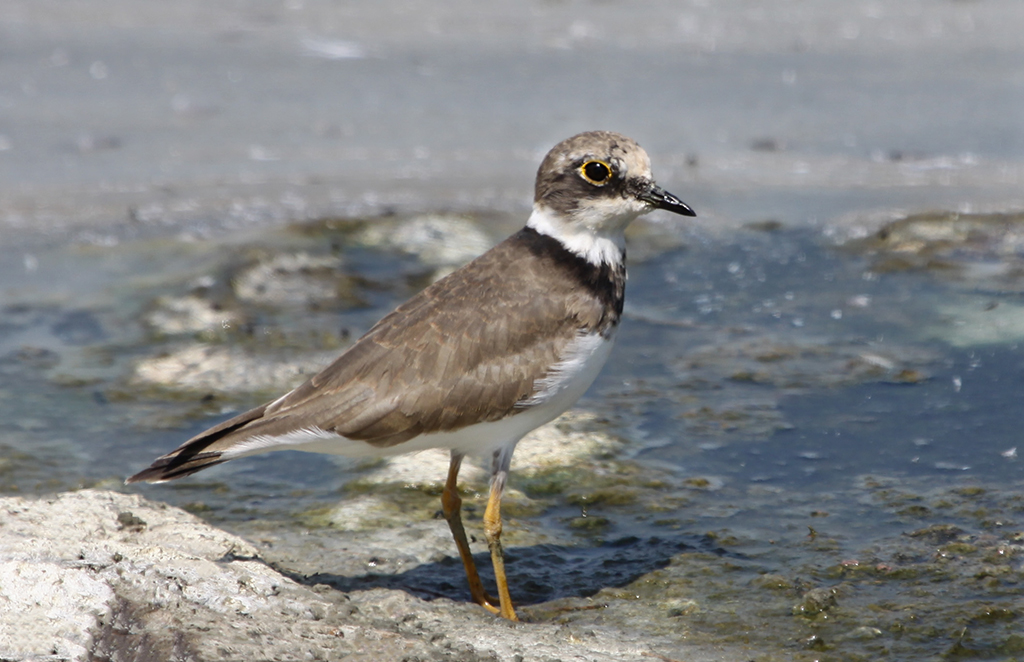
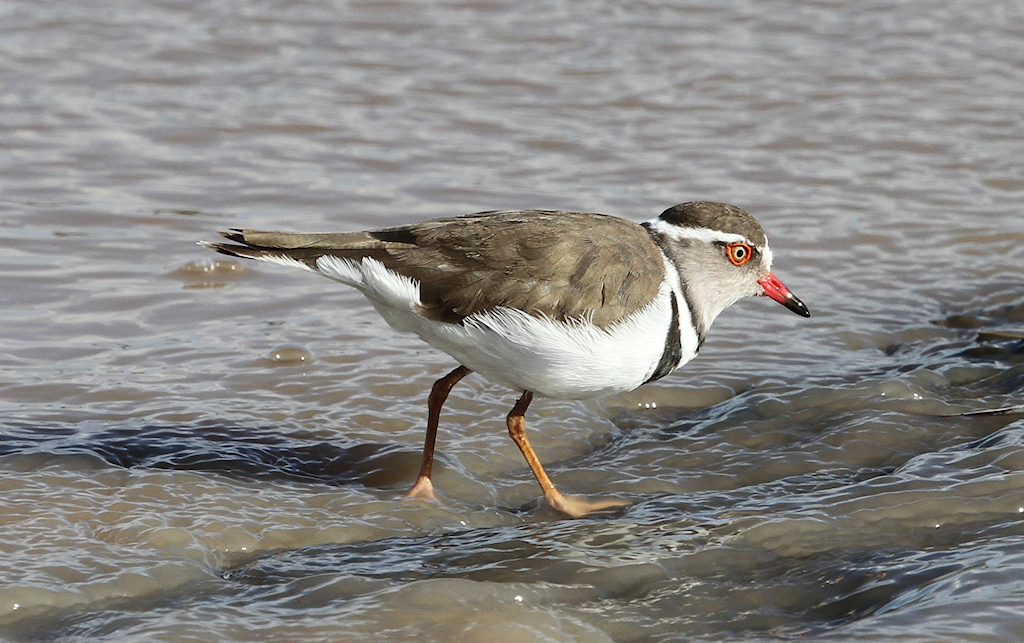
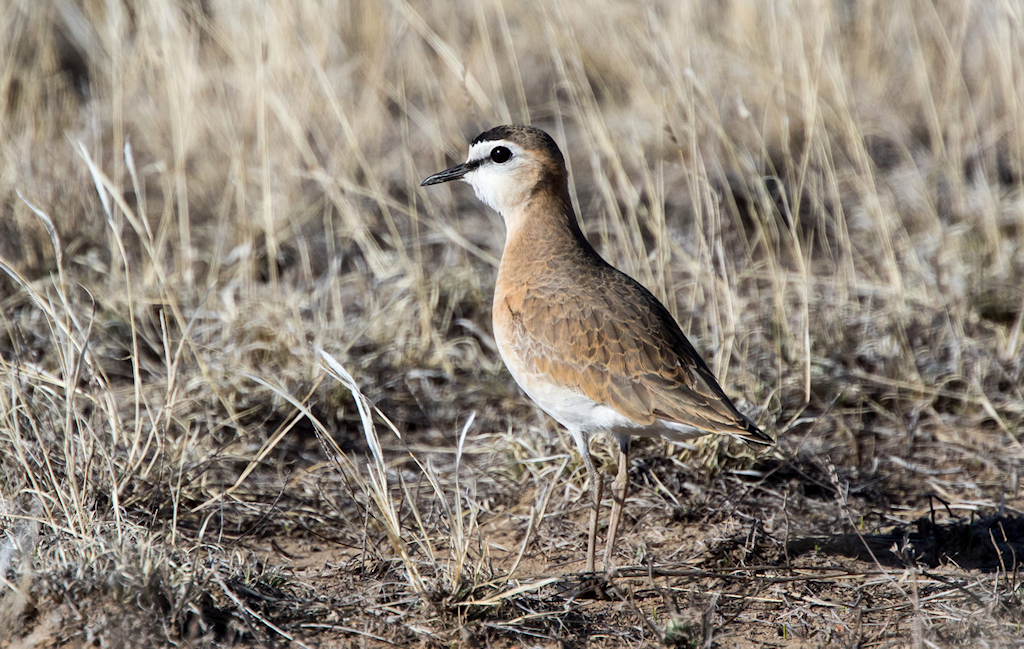
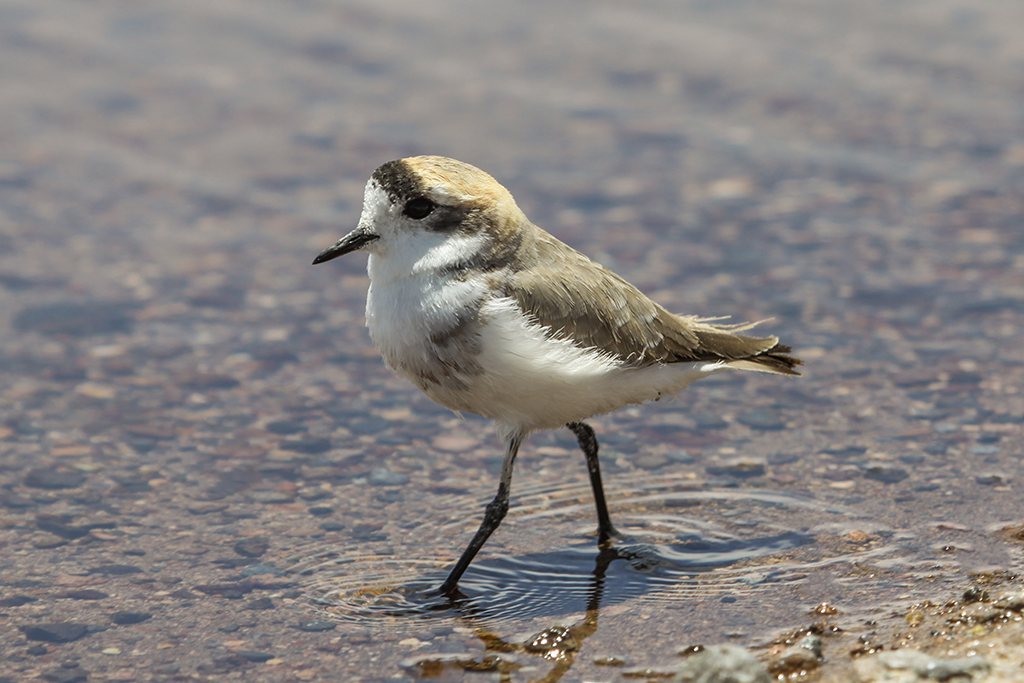
Ringed Plovers
The family Charadriidae is very large with seventy species listed and is split into subfamilies.
The subfamily Charadriinae contains forty-two species in nine genera;
Charadrius (4), Thinornis (7), Anarhynchus (25), Oreopholus (1) Phegornis (1), Hoploxypterus (1) Eudromias (1), Zonibyx (1) and Peltohyas (1). We have further divided this group into three sections.
Section 1 Ringed Plovers.
Family: CHARADRIIDAE (Leach 1820)
Subfamily: CHARADRIINAE (Leach 1820)
Genera: There are 4 species of plover within the Charadrius genus, 7 species in Thinornis and a further 25 within the Anarhynchus genus; all but one of which (Wrybill A. frontalis) were previously in Charadrius.
- Charadrius – Late Latin; charadrius yellowish bird mentioned in the Vulgate Bible (late 4th century) (Greek; kharadrios unknown plain-coloured nocturnal birds that dwelt in ravines and river valleys (kharadra ravine) (Linnaeus 1758)
- Thinornis – Greek – this beach, sand; ornis bird (Gray, G. 1845)
- Anarhynchus – Greek – ana backwards; rhunkhos bill (Quoy & Gaimard 1830)
Distribution
- Europe: Common Ringed, Little Ringed.
- Africa: Common Ringed, Little Ringed, Three-banded, Forbes’.
- Asia: Common Ringed, Long-billed, Little Ringed.
- Australasia: Hooded, Shore, Black-fronted.
- North America: Common Ringed, Semipalmated, Killdeer, Piping.
- Central and South America: Semipalmated, Killdeer, Piping.
Current Taxonomy: Three species. Painted-snipes are closely related to jacanas and are commonly placed in a superfamily with them called Jacanoidea.
- Genus Charadrius
- Common Ringed Plover C. hiticula (Linnaeus 1758)
- ∗ C. h. hiaticula (Linnaeus 1758)
- ∗ C. h. tundrae (Lowe 1915)
- ∗ C. h. psammodromus (Salomonsen 1930)
- Semipalmated Plover C. semipalmatus (Bonaparte 1825)
- Killdeer C. vociferus (Linnaeus 1758)
- Piping Plover C. melodus (Ord 1824)
- Common Ringed Plover C. hiticula (Linnaeus 1758)
- Genus Thinornis
- Long-billed Plover T. placidus (Gray, J. & Gray, G. 1863)
- Little Ringed Plover T. dubius (Scopoli 1786)
- Three-banded Plover T. tricollaris (Vieillot 1818)
- Forbes’s Plover T. forbesi (Shelley 1883)
- Hooded Plover T. cucullatus (Vieillot 1818)
- Shore Plover T. novaeseelandiae (Gmelin 1789)
- Black-fronted Plover T. melanops (Vieillot 1818)
- Genus Anarhynchus
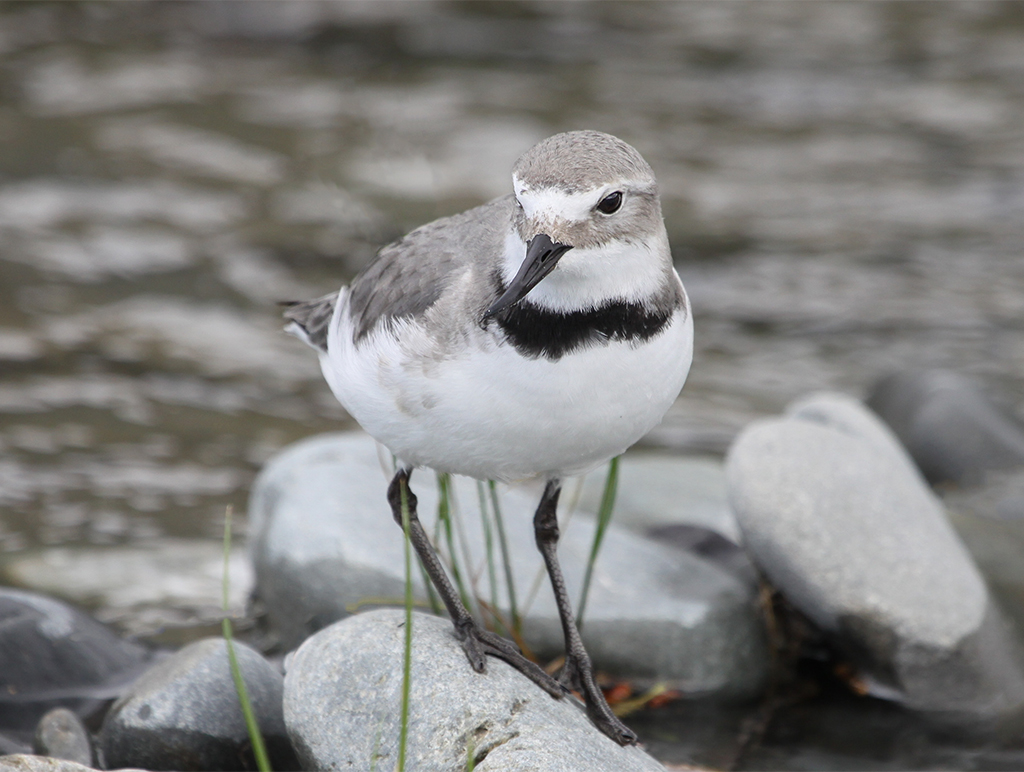
- Wrybill Anarhynchus frontalis (Quoy & Gaimard 1830)
- New Zealand Plover A. obscurus (Gmelin 1789)
- Wilson’s Plover A. wilsonia (Ord 1814)
- Madagascan Plover A. thoracicus (Richmond1896)
- Kittlitz’s Plover A. pecuarius (Temminck 1823)
- St Helena Plover A. sanctaehellenae (Harting 1873)
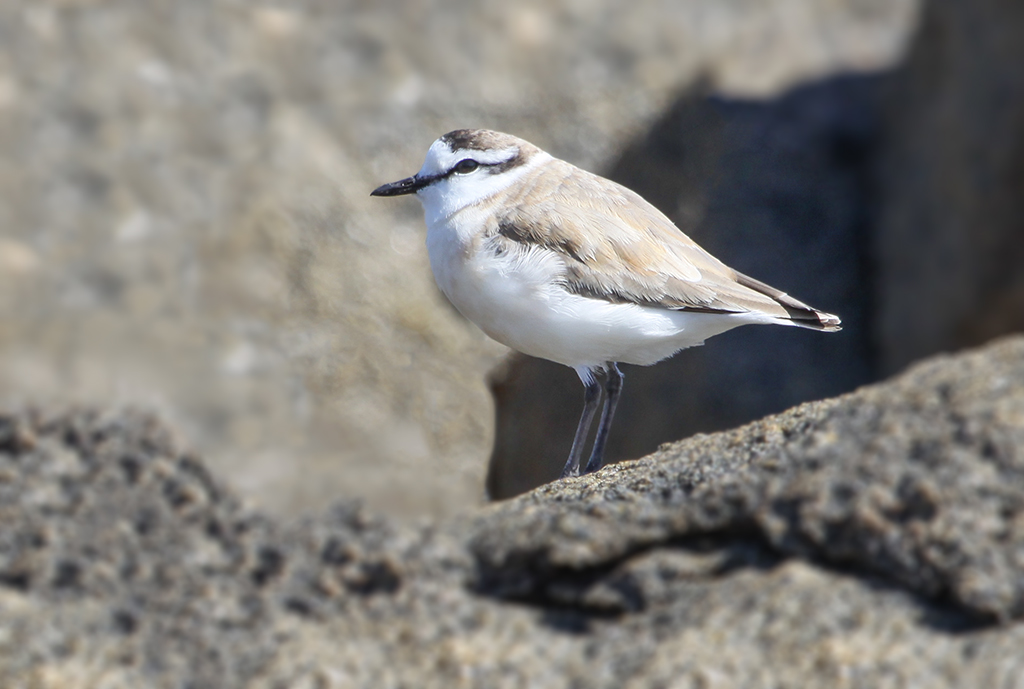
- White-fronted Plover A. marginatus (Vieillot 1818)
- Kentish Plover C. alexandrinus (Linnaeus 1758)
- Snowy Plover A. nivosus (Cassin 1858)
- Javan Plover A. javanicus (Chasen 1938)
- Collared Plover A. collaris (Vieillot 1818)
- Puna Plover A. alticola (Berlepsh & Stolzmann 1902)
- Two-banded Plover A. falklandicus (Latham 1790)
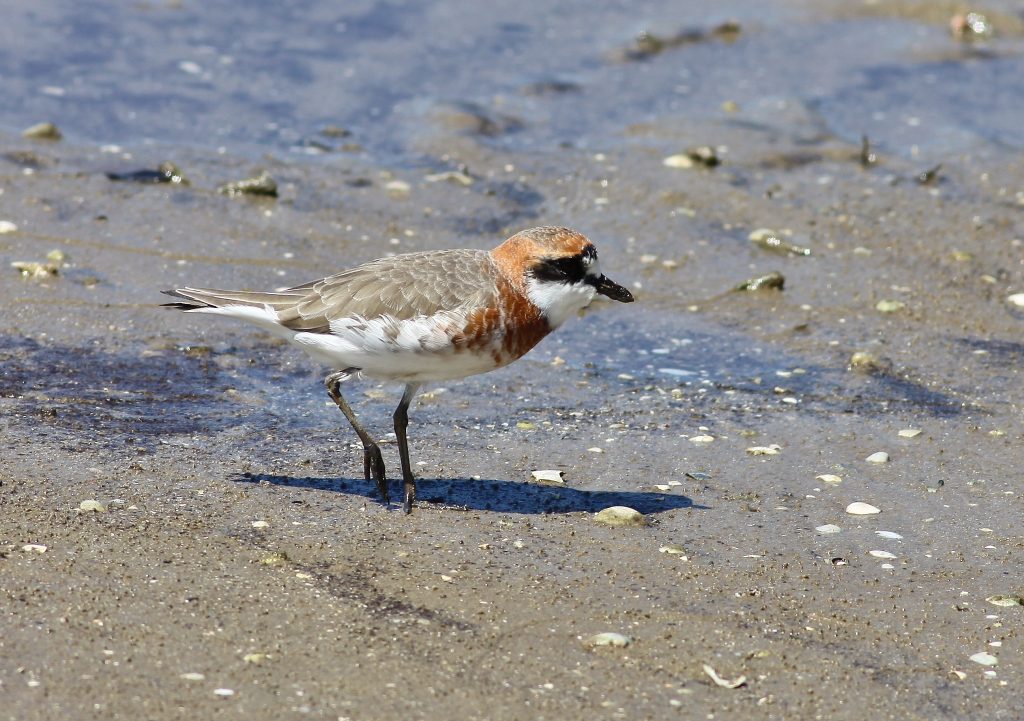
- Siberian Sand Plover C. mongolus (Pallas 1776)
- Tibetan Sand Plover A. atrifrons (Wagler 1829)
- ∗ A. a. pamirensis (Richmond 1896)
- ∗ A. a. atrifrons (Wagler 1829)
- ∗ A. a. schaeferi (Meyer de Schauensee 1938)
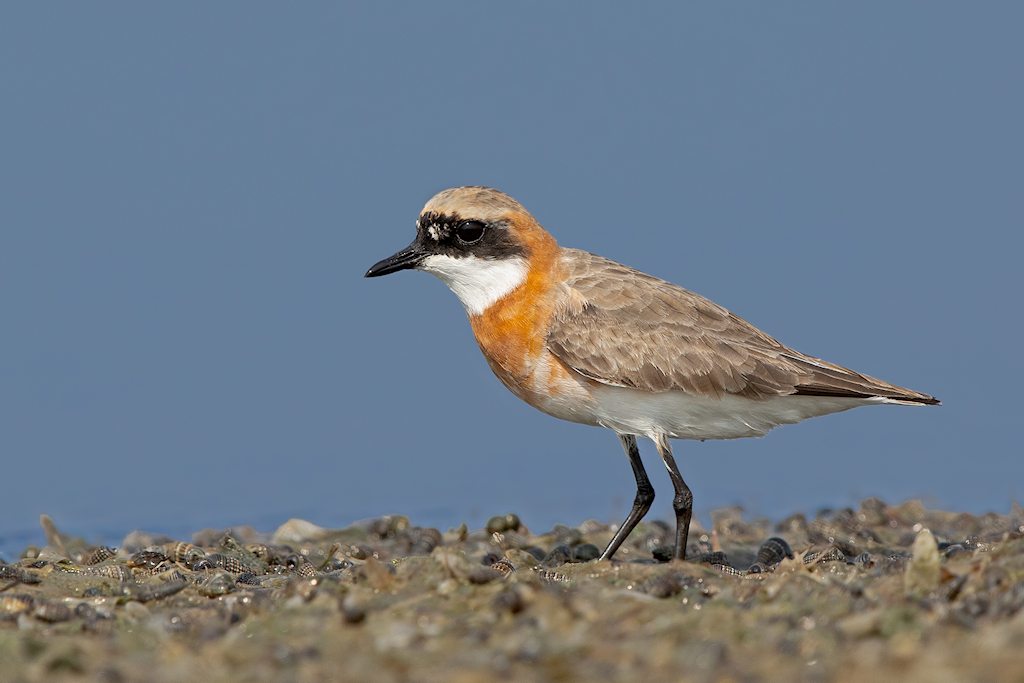
- Greater Sand Plover A. leschenaultii (Lesson 1826)
- Caspian Plover A. asiaticus (Pallas 1773)
- Oriental Plover A. veredus (Gould 1848)
- Mountain Plover A. montanus (Townsend 1837)
- Double-banded Plover A. bicinctus (Jardine & Selby 1827)
- White-faced Plover A. dealbatus (Swinhoe 1870)
- Red-capped Plover A. ruficapillus (Temminck 1822)
- Malaysian Plover A. peronii (Schlegel 1865)
- Chestnut-banded Plover A. pallidus (Strickland 1852)
- ∗ A. p. pallidus (Strickland 1852)
- ∗ A. p. venustus (Fischer & Reichenow 1884)
Past Taxonomy: Has been very confusing due to this families apparent affinities to other groups such as rails and true snipes.
- Ægialitis or Aegialitis (Boie 1822) is an old synonym for Charadrius but is no longer recognised in favour of the latter.
- Wilson’s Plover subspecies Charadrius (now Anarhynchus). w. crassirostris (Carlos and Voisin 2011) was formerly called C. w. brasiliensis (Grantsau 2008). According with the International code of Zoological Nomenclature (1999) this change meant that Greater Sandplover subspecies C. l. crassirostris (Severtzov 1873) had to be remnamed C. l. scythicus (Carlos, Roselaar & Voisin 2012).
- Mongolian and Lesser Sandplover were considered subspecies of Lesser Sandplover Charadrius mongolus. In 2022 a study showed that they were sufficiently different to warrant specific status creating Siberian Sandplover C. mongolus/stegmanniand and Tibetan Sandplover C. atrifrons/schaeferi/pamirensis. Both now in the genus Anarhynchus joining the only species originally in this genus Wrybill A. frontalis. Full List;
- New Zealand Plover A. obscurus
- Wilson’s Plover A. wilsonia
- Madagascar Plover A. thoracicus
- Kittlitz’s Plover A. pecuarius
- St Helena Plover A. sanctaeheleniae
- Kentish Plover A. alexandrinus
- Snowy Plover A. nivosus
- Javan Plover A. javanicus
- White-faced Plover A. dealbatus
- White-fronted Plover A. marginatus
- Red-capped Plover A. ruficapillus
- Malaysian Plover A. peronii
- Chestnut-banded Plover A. pallidus
- Collared Plover A. collaris
- Puna Plover A. alticola
- Northern and Southern Red-breasted Plover were formerly split having been called New Zealand Dotterel and were considered subspecies Charadrius obscurus obscurus and Charadrius o. aquilonius. In the 2025 Avilist they are once again returned to a single species New Zealand Plover as Anarhynchus obscurus.
- The 2025 Avilist moved 7 Charadrius plovers Long-billed, Little Ringed, Hooded, Shore, Black-fronted, Forbes’s, Three banded to Thinornis.
Bibliography
- Avibase https://avibase.bsc-eoc.org
- BirdLife International. IUCN Red List for birds. Downloaded from http://www.birdlife.org on 26/03/2020
- Carlos, C. J. & J-F. Voisin (2012). Charadrius wilsonia brasiliensis Grantsau & Lima, 2008, is a junior synonym of Charadrius crassirostris Spix, 1825: Bulletin of the British Ornithologists’ Club. 131 (1): 165–170.
- Carlos, C. J., S. Roselaar & J-F. Voisin (2012). A replacement name for Charadrius leschenaultii crassirostris (Severtzov, 1873), a subspecies of Greater Sand Plover: Bulletin of the British Ornithologists’ Club. 132 (1): 63–65.
- del Hoyo, Josep, Andrew Elliot & Jordi Sargatal. Handbook of the Birds of the World – Vol. 3 (1996)
- Grantsau, R. & P. C. Lima (2008). Uma nova subespécie de Charadrius wilsonia (Aves, Charadriiformes) para o Brasil: Atualidades Ornitológicas. 142: 4–5.
- Hayman, Peter, John Marchant & Tony Prater. Shorebirds – An identification guide to the waders of the world (1986)
- HBW Alive https://www.hbw.com
- Jobling, James A. Helm Dictionary of Scientific Bird Names (2010)
- Kennerley, P. R., D. N.Bakewell , P. D. Round. Rediscovery of a long-lost Charadrius plover from South-East Asia. Forktail 24, 63–79 (2008)
- Seebohm, Henry. The Geographical Distribution of the Family Charadriidae, or, The Plovers, Sandpipers, Snipes, and Their Allies (1888)
- Wei, Chentao, Manuel Schweizer, Pavel S Tomkovich, Vladimir Yu Arkhipov, Michael Romanov, Jonathan Martinez, Xin Lin, Naerhulan Halimubieke, Pinjia Que, Tong Mu, Qin Huang, Zhengwang Zhang, Tamás Székely, Yang Liu. Genome-wide data reveal paraphyly in the sand plover complex (Charadrius mongolus/leschenaultii) (2022)
Click on an image for more information about the individual species.