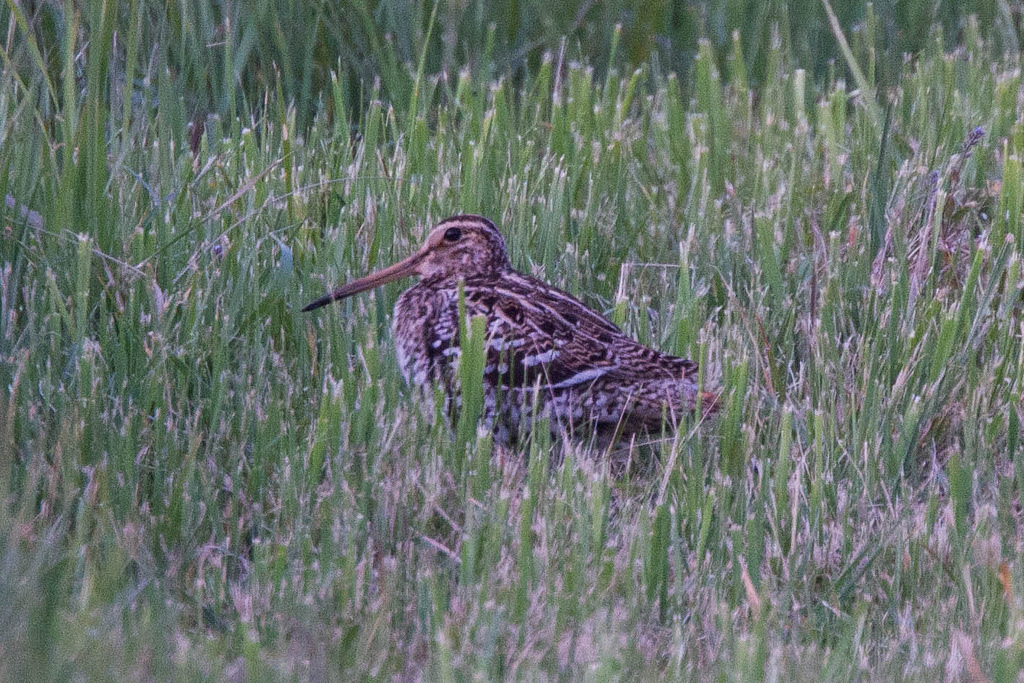
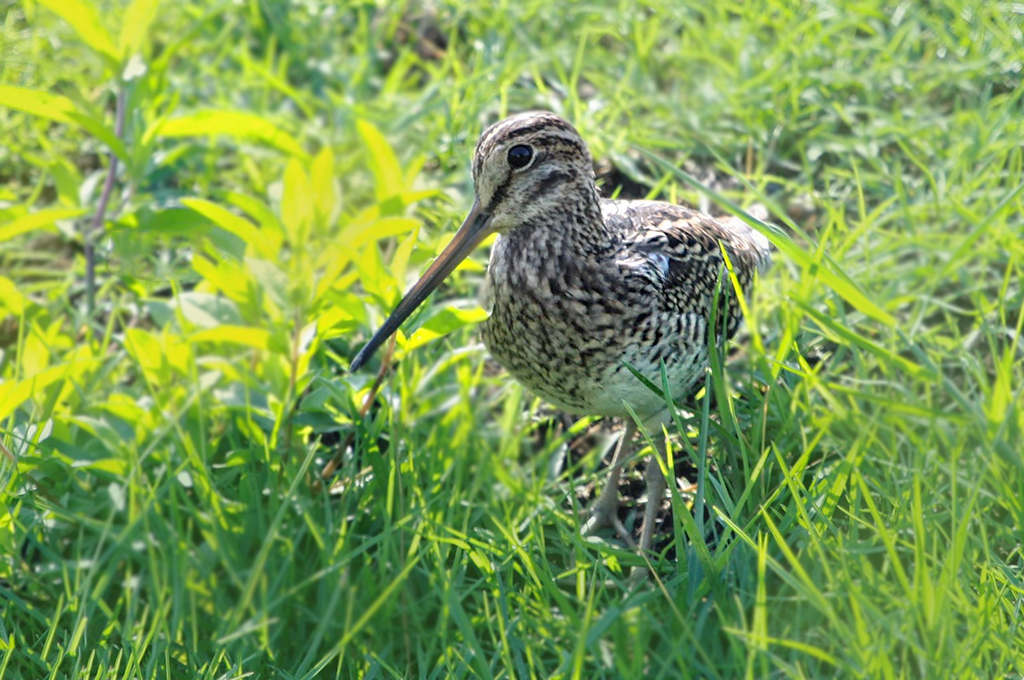
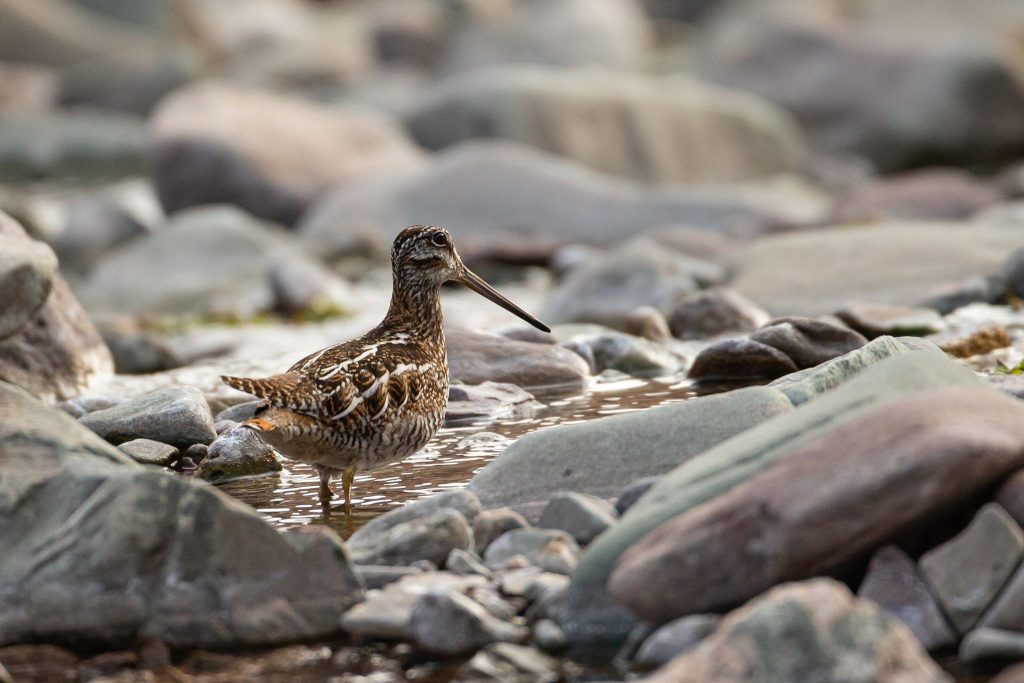
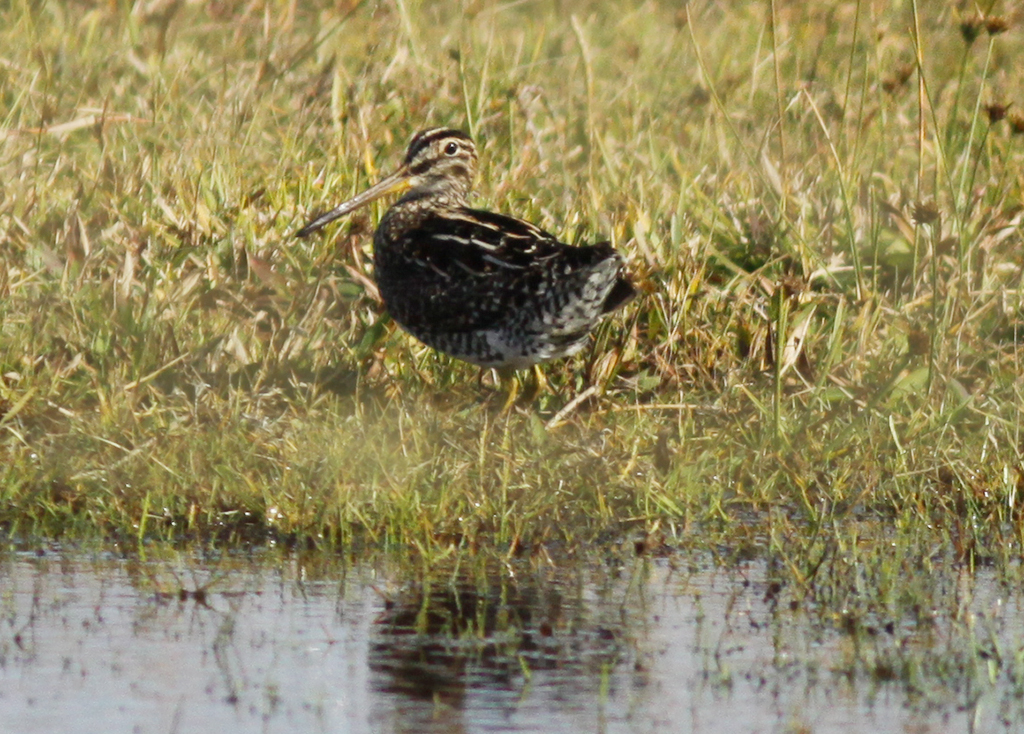
Woodcocks, Snipes and Dowitchers
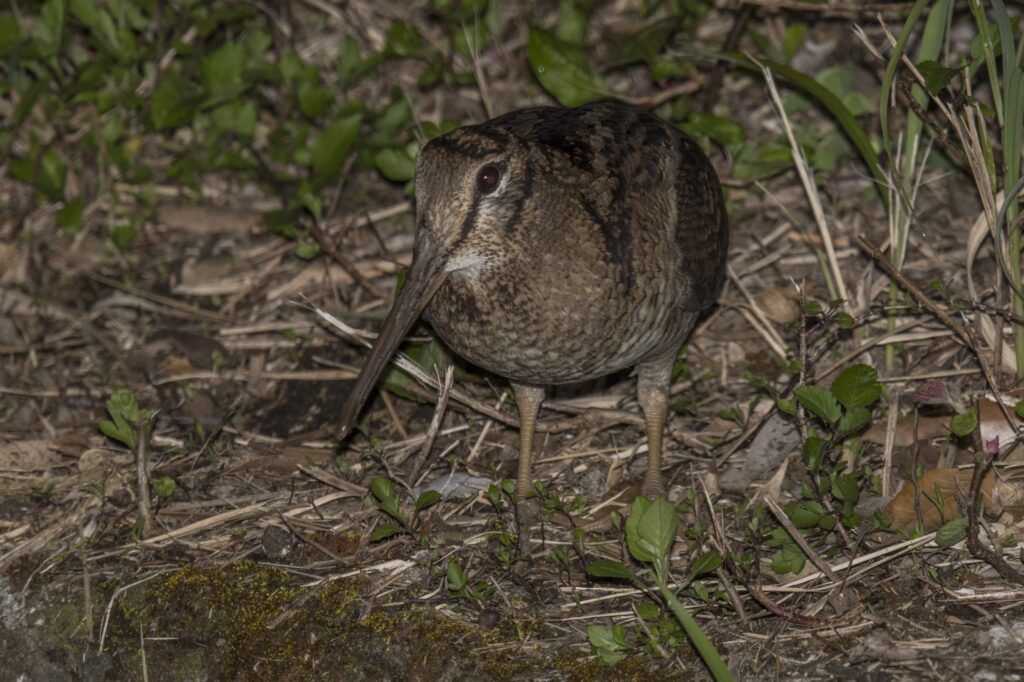
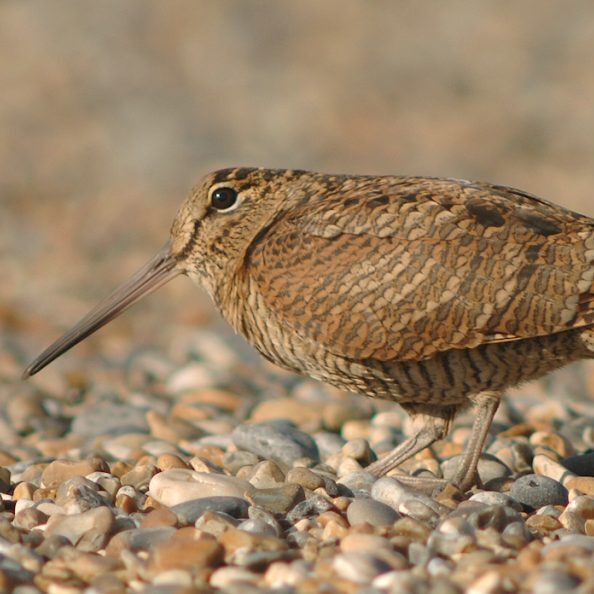
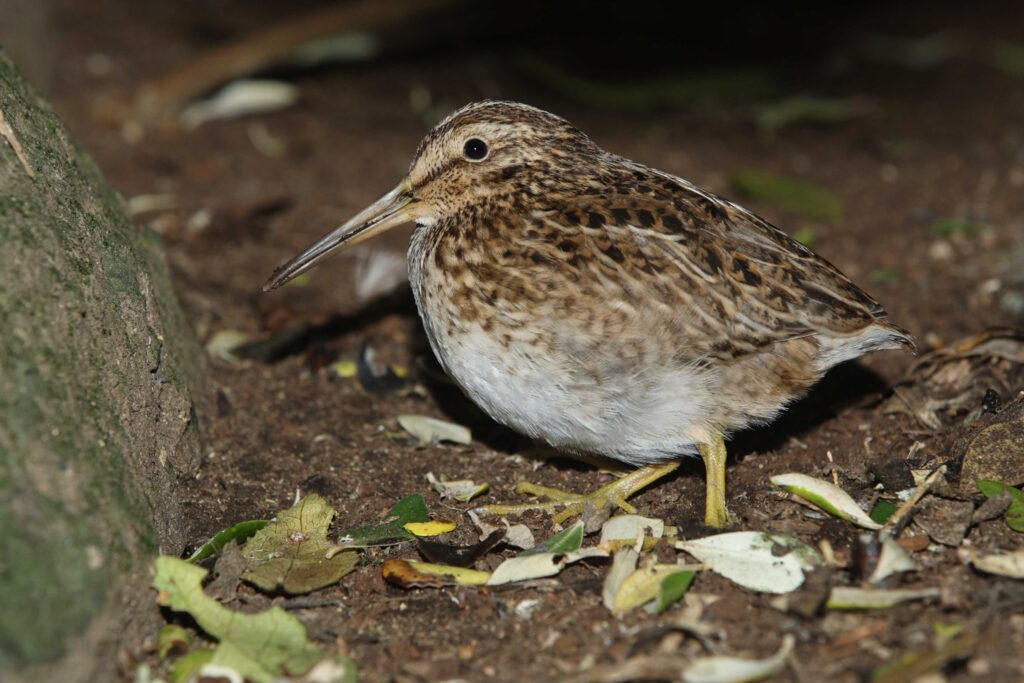
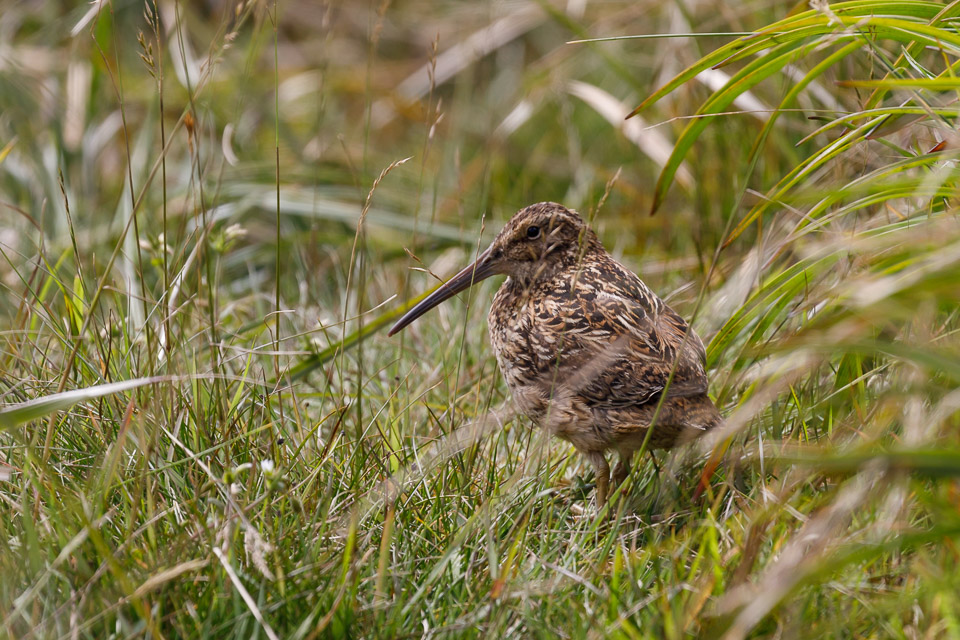
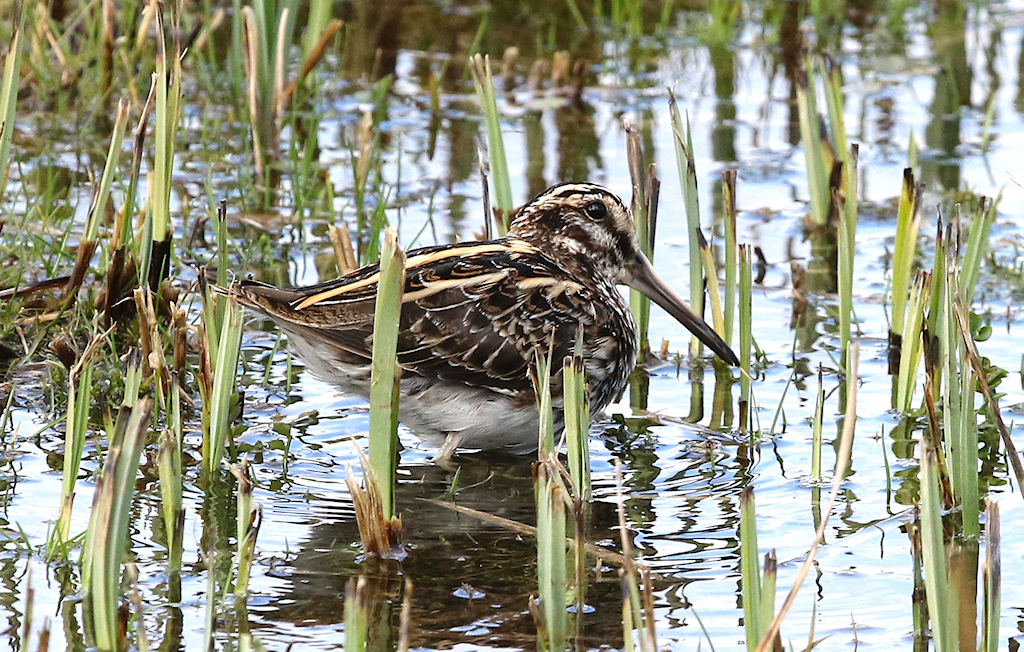
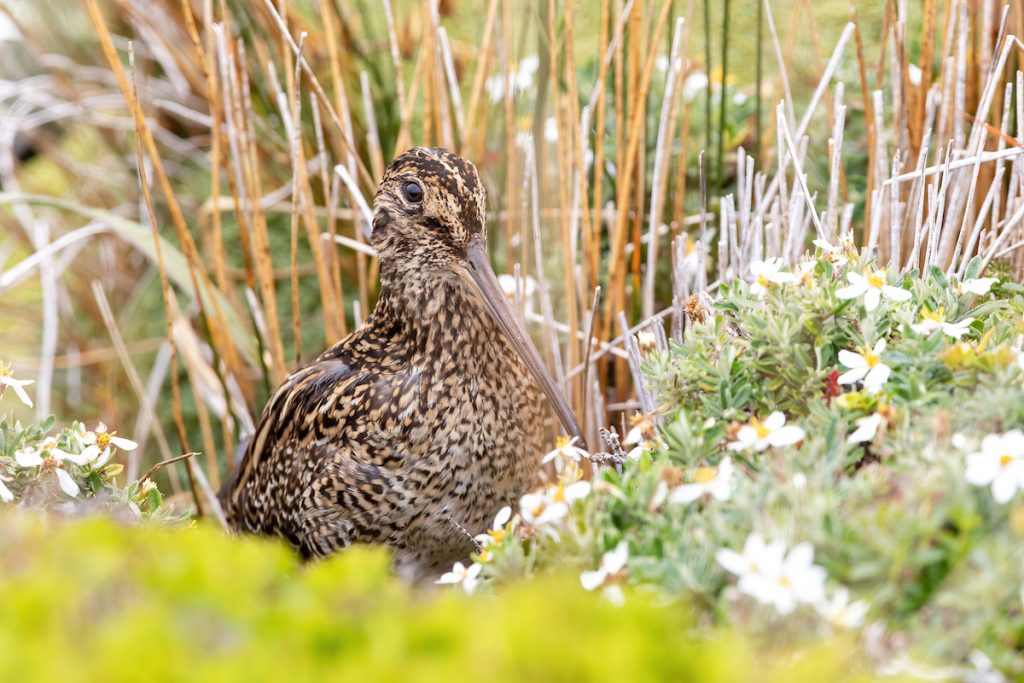
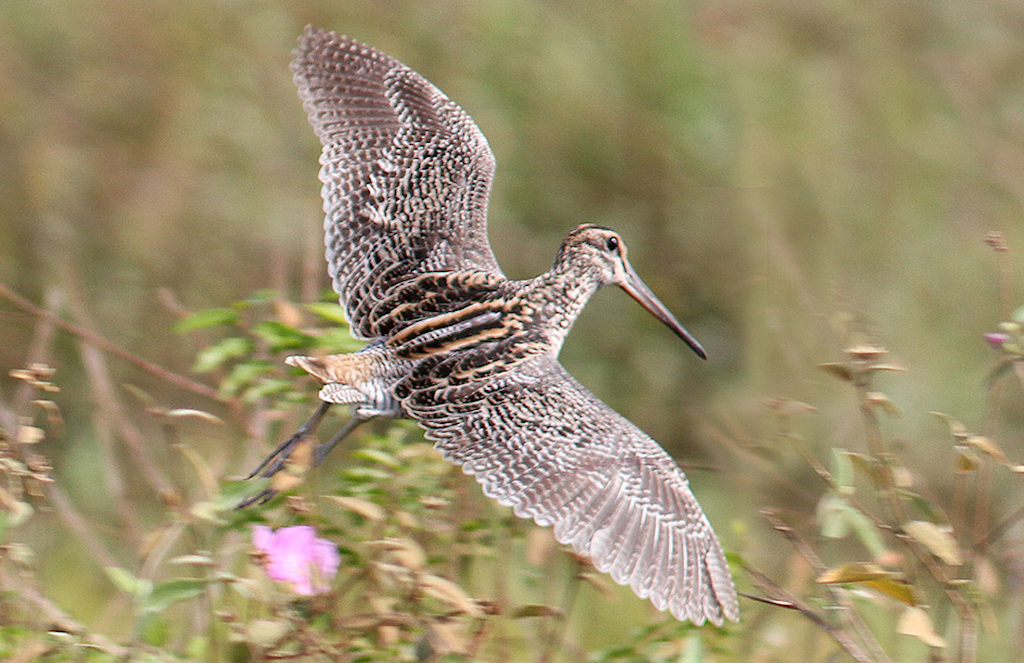
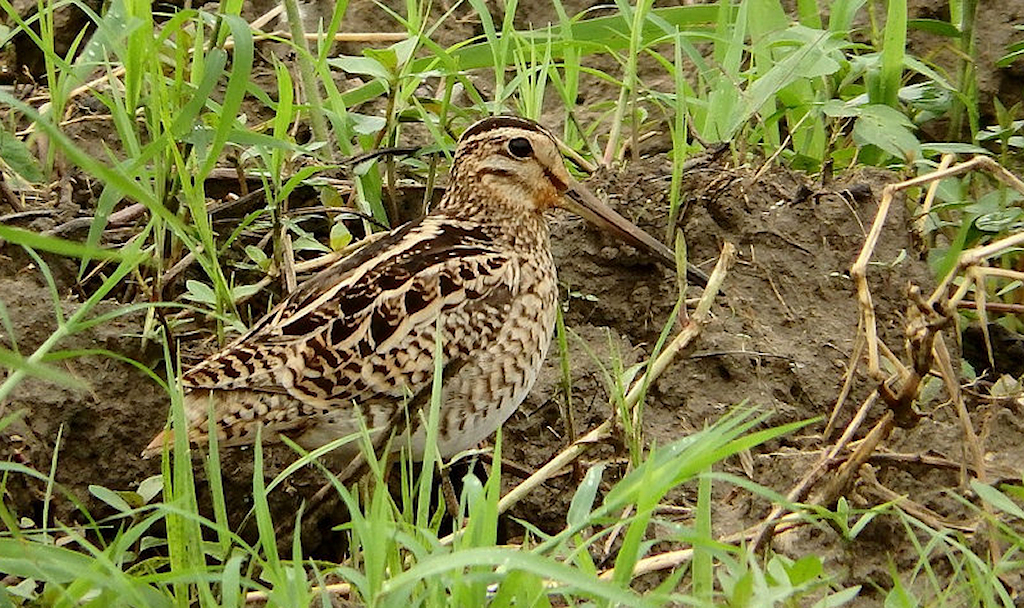
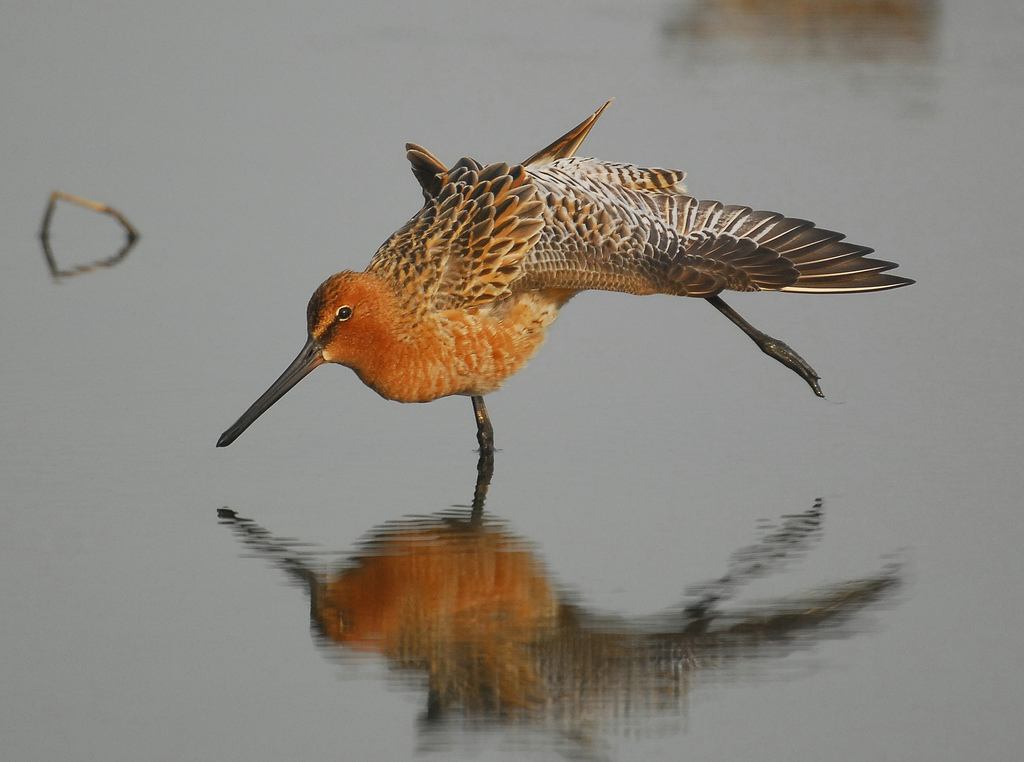
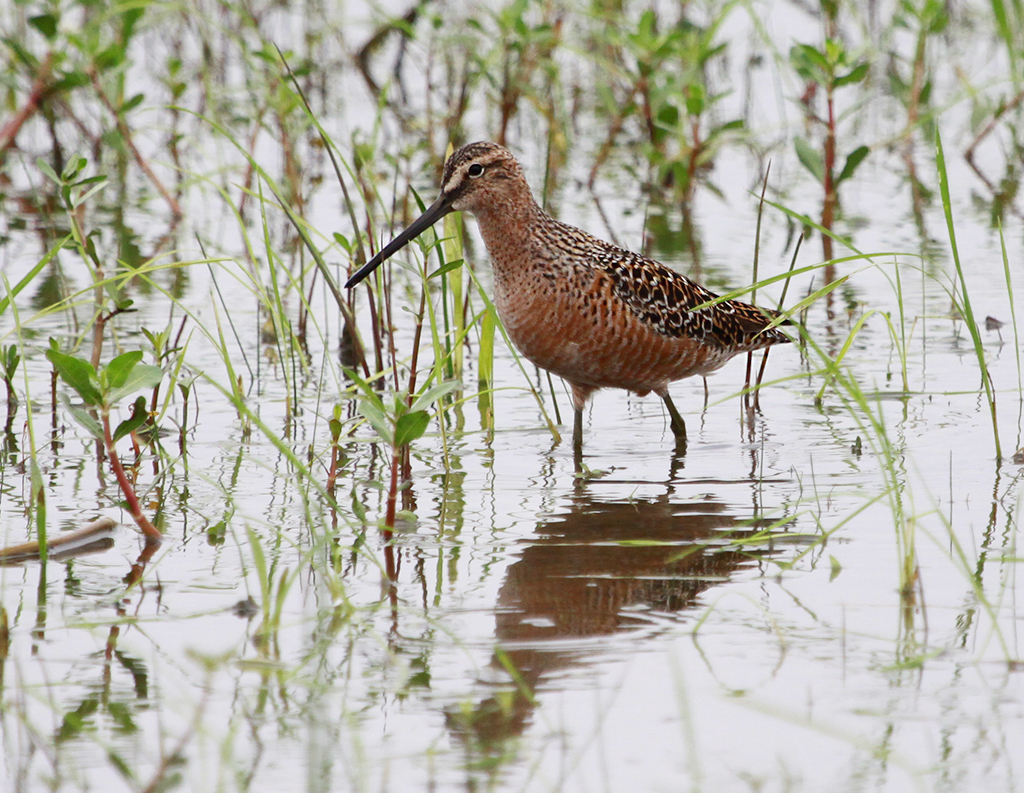
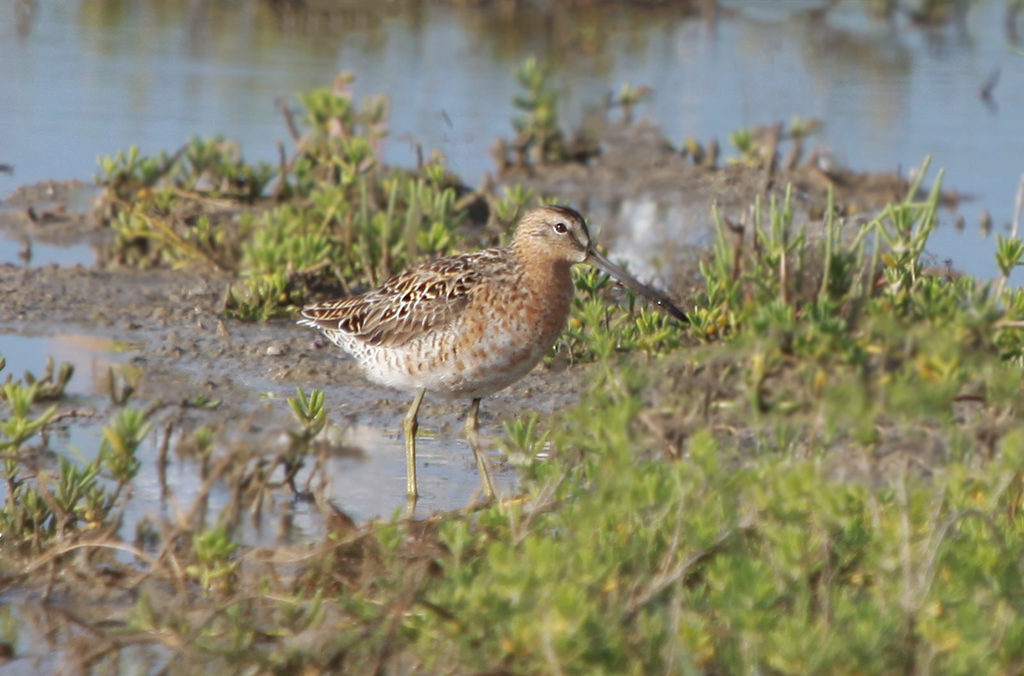
The family, SCOLOPACIDAE, is made up of sixteen genera split between seven subfamilies. Subfamily SCOLOPACINAE comprises Woodcocks in the genus Scolopax, GALLINAGININAE Snipes in the genera Coenocorypha, Lymnocryptes and Gallinago and the Dowitchers in the genus Limnodromus. There are thirty-four species in the subfamily, eight woodcocks, twenty-three snipes and three dowitchers.
Family: SCOLOPACIDAE (Rafinesque 1815)
Subfamily: SCOLOPACINAE (Rafinesque 1815)
Genus:
- Scolopax – Latin; scolopax snipe, woodcock, derived from Greek; askalopas Woodcock. (Linnaeus 1758).
Subfamily: GALLINAGININAE (Olphe-Galliard 1891)
Genera:
- Coenocorypha – Latin; coenum mud, slime; coryphaeus leader, derived from Greek; koruphaios chief (Gray, G. 1855).
- Lymnocryptes – Greek; limne marsh; kruptos hidden (krupto to conceal) (Boie 1826).
- Gallinago – Modern Latin; gallinago woodcock snipe, derived from Latin; gallina hen; ago resembling (Brisson 1760).
- Limnodromus – Greek; Limne marsh, -dromos -racer, -runner (Wied 1833)
Distribution
- Europe: Eurasian Woodcock, Jack, Great and Common Snipe.
- Africa: Eurasian Woodcock, African, Madagascar, Great and Common Snipe.
- Asia: Eurasian, Amami, Javan, New Guinea, Bukidnon, Sulawesi and Moluccan Woodcock, Solitary, Latham’s, Wood and Pintail Snipe, Asian Dowitcher.
- Australasia: Javan Woodcock, Chatham, Snares, Auckland, North Island, South Island, Latham’s and Swinhoe’s Snipe.
- North America; American Woodcock, Wilson’s Snipe, Short-billed and Long-billed Dowitcher.
- Central and South America: South American, Noble, Giant, Fuegian, Andean and Imperial Snipe.
Current Taxonomy:
- Eurasian Woodcock Scolopax rusticola (Linnaeus 1758)
- Amami Woodcock S. mira (Hartert 1916)
- Javan Woodcock S. saturata (Horsfield 1821)
- New Guinea Woodcock S. rosenbergii (Schlegel 1871)
- Bukidnon Woodcock S. bukidnonensis (Kennedy et al. 2001)
- Sulawesi Woodcock S. celebensis (Riley 1921)
- ∗ S. c. celebensis (Riley 1921)
- ∗ S. c. heinrichi (Stresemann 1932)
- Moluccan Woodcock S. rochussenii (Schlegel 1866)
- American Woodcock S. minor (Gmelin 1789)
- Chatham Snipe Coenocorypha pusilla (Buller 1869)
- Snares Snipe C. huegeli (Tristram 1893)
- Subantarctic Snipe C. aucklandica (Gray, G.1845)
- ∗ C. a. aucklandica (Gray, G.1845)
- ∗ C. a. meinertzhagenae (Rothschild 1927)
- ∗ C. a. perseverence (Miskelly & Baker 2010)
- South Island Snipe Coenocorypha iredalei (Rothschild 1921 )
- North Island Snipe Coenocorypha barrierensis (Oliver 1955)
- Imperial Snipe Gallinago imperialis (Sclater, P. and Salvin 1869)
- Andean Snipe G. jamesoni (Jardine and Bonaparte 1855)
- Fuegian Snipe G. stricklandii (Gray, G. 1845)
- Solitary Snipe G. solitaria (Hodgson 1831)
- Latham’s Snipe G. hardwickii (Gray, J. 1831)
- Wood Snipe G. nemoricola (Hodgson 1836)
- Pin-tailed Snipe G. stenura (Bonaparte 1831)
- Swinhoe’s Snipe G. megala (Swinhoe 1861)
- African Snipe G. nigripennis (Bonaparte 1839)
- Madagascan Snipe G. macrodactyla (Bonaparte 1839)
- Great Snipe G. media (Latham 1787)
- Common Snipe G. gallinago (Linnaeus 1758)
- Wilson’s Snipe G. delicata (Ord 1825)
- South American Snipe G. paraguaiae (Vieillot 1816)
- Magellanic Snipe G. magellanica (King 1828)
- Puna Snipe G. andina (Taczanowski 1875)
- ∗ G. a. andina Taczanowski 1875
- ∗ G. a. innotata (Hellmayr 1932)
- Noble Snipe G. nobilis (Sclater, P. 1856)
- Giant Snipe G. undulata (Boddaert 1783)
- Jack Snipe Lymnocryptes minimus (Brünnich 1764)
- Asian Dowitcher Limnodromus semipalmatus (Blyth 1848)
- Short-billed Dowitcher L. griseus (Gmelin 1789)
- Long-billed Dowitcher L. scolopaceus (Say 1822)
Fossil Species
- Extant species
- Scolopax rusticola magnus (Potapova 1990)
- Extinct species
- Scolopax baranensis (fossil, Early Pliocene of Hungary – may not be valid) (Jánossy 1979)
- Scolopax carmesinae (fossil, Early/Middle Pliocene? of Menorca, Mediterranean) (Seguí 1999)
- Scolopax hutchensi (fossil, Late Pliocene – Early Pleistocene of Florida, USA) (Emslie 1998)
- Scolopax anthonyi (prehistoric) (Wetmore 1920)
- Scolopax brachycarpa (subfossil, Holocene of Haiti) (Takano & Steadman 2015)
- Coenocorypha chathamica (subfossil) (Forbes, H. 1893)
Bibliography
- BirdLife International: IUCN Red List for birds. Downloaded from http://www.birdlife.org on 26/03/2020
- del Hoyo, Josep, Andrew Elliot & Jordi Sargatal: Handbook of the Birds of the World – Vol. 3 (1996)
- Hayman, Peter, John Marchant & Tony Prater: Shorebirds – An identification guide to the waders of the world (1986)
- Jobling, James A.: Helm Dictionary of Scientific Bird Names (2010)
- Seebohm, Henry: The Geographical Distribution of the Family Charadriidae, or, The Plovers, Sandpipers, Snipes, and Their Allies (1888)
- Miskelly , C. M. (2013). Forbes’ snipe. In: Miskelly, C. M. (ed.). New Zealand Birds Online. Available from: www.nzbirdsonline.org.nz
Click on an image for more information about the individual species.