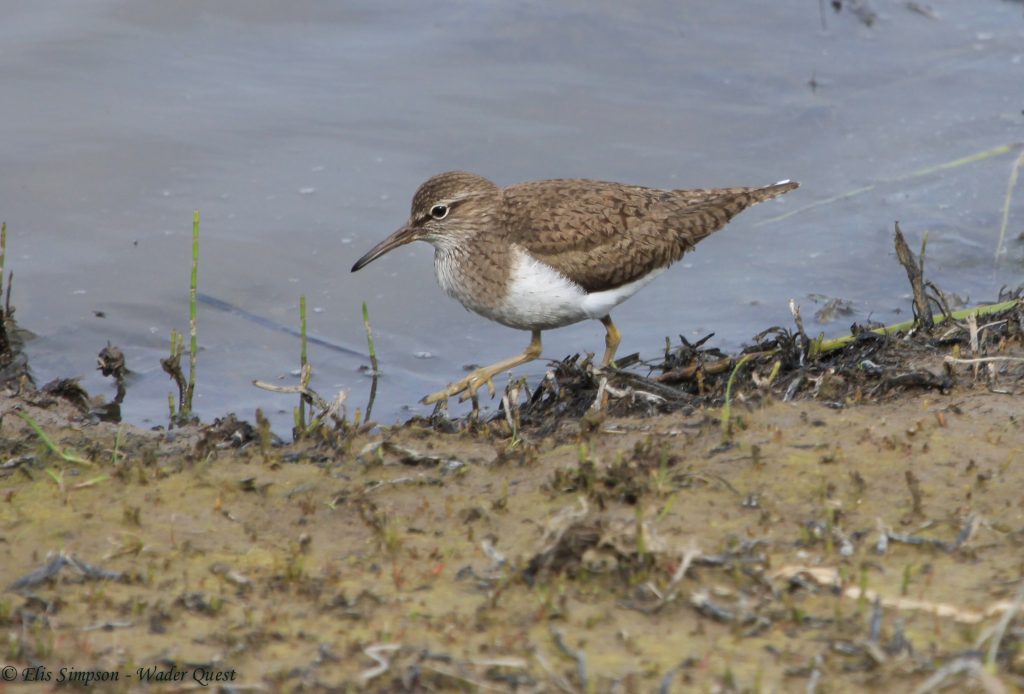
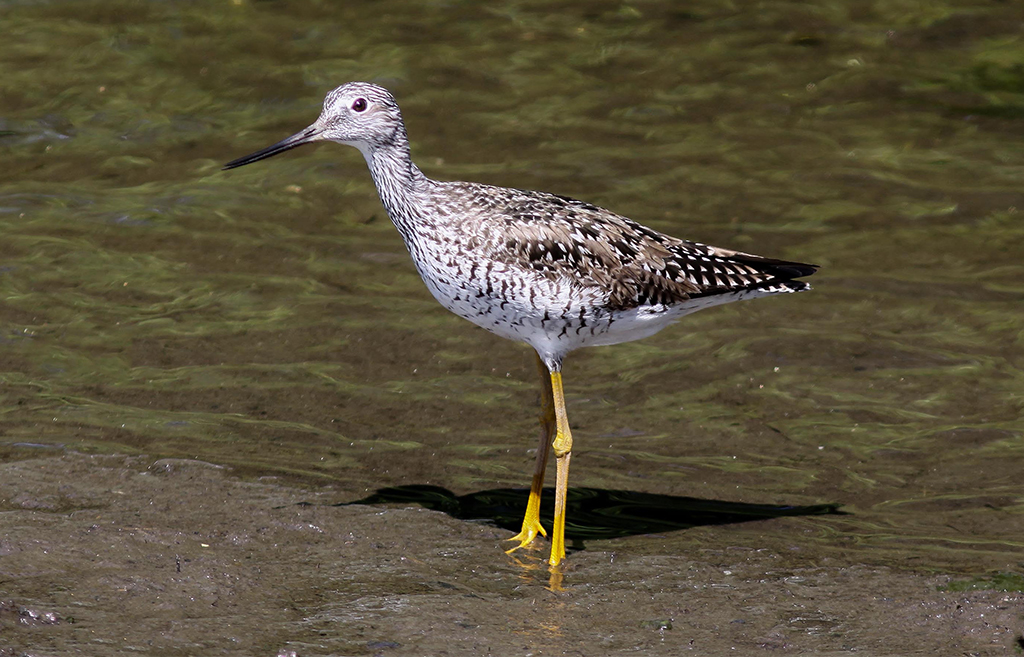
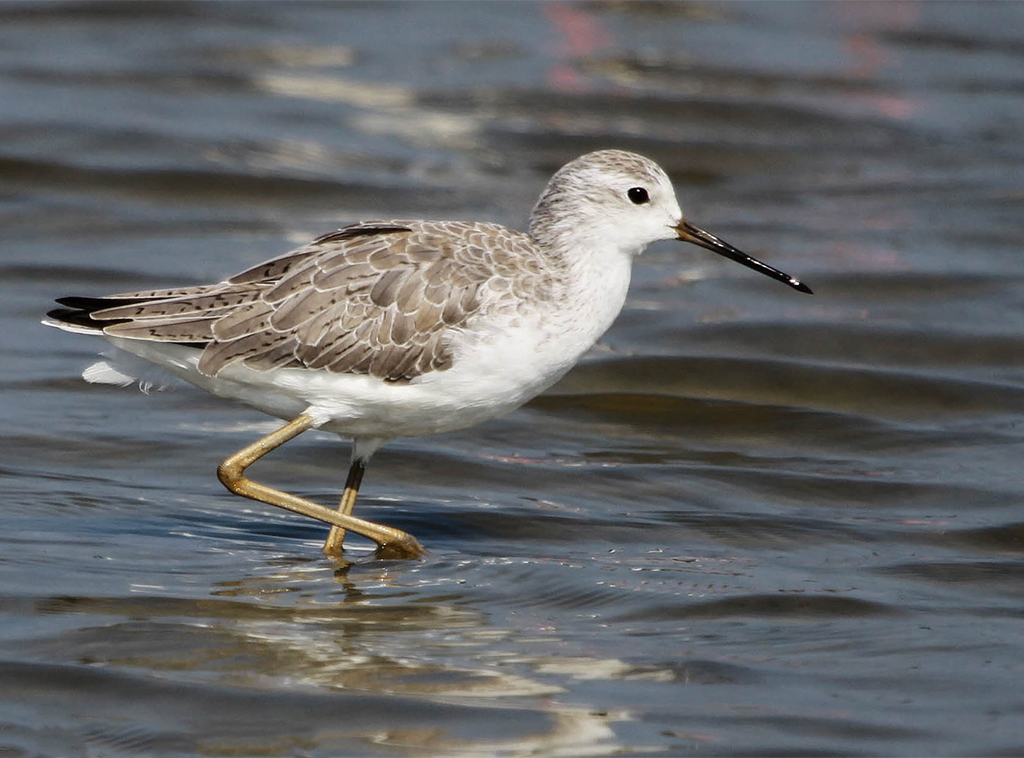
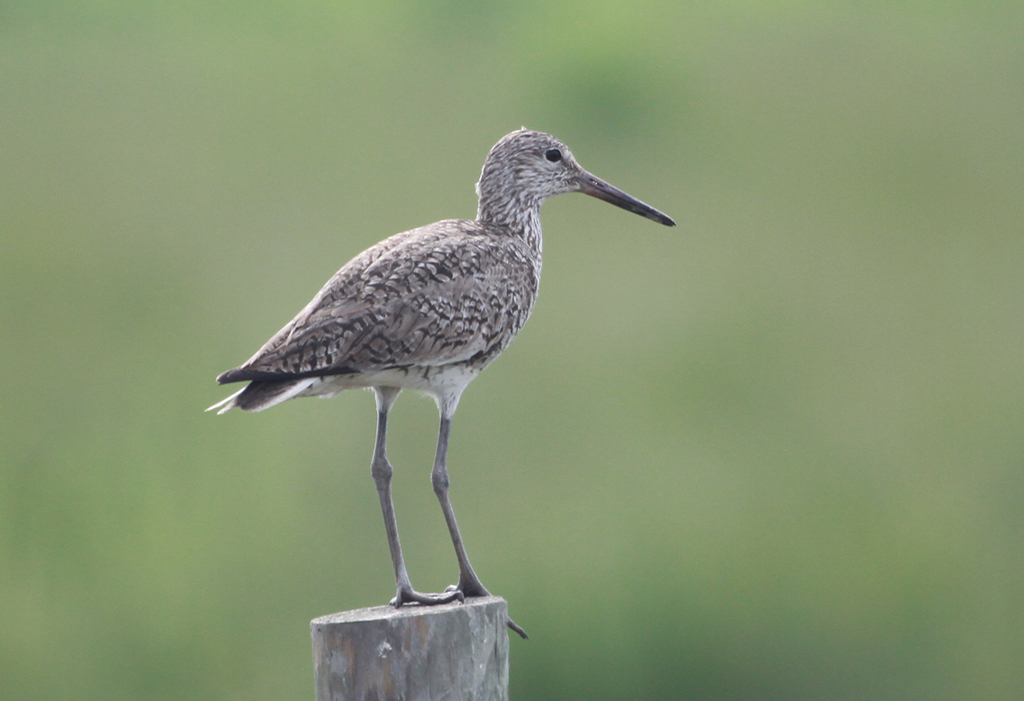
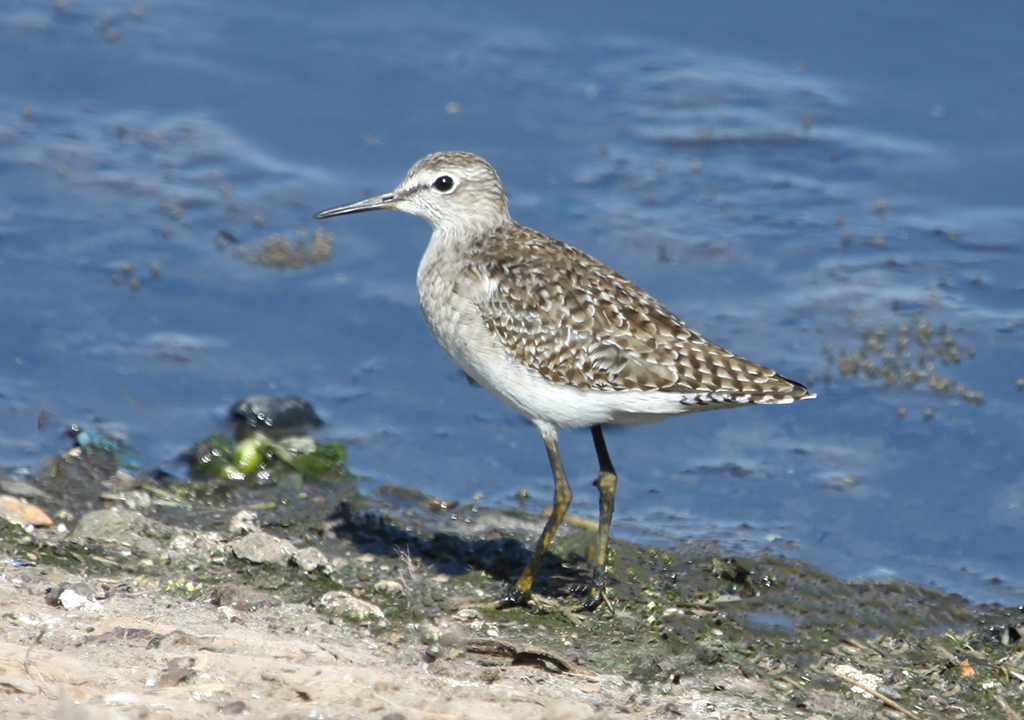
Shanks, Tattlers and Polynesian Sandpipers
The family, SCOLOPACIDAE, is made up of sixteen genera split between seven subfamilies. Subfamily TRINGINAE is itself split into three tribes. This page covers two tribes, TRINGINI or shanks, which comprises the genera Actitis, Tringa and Xenus and PROSOBONIINI with just one genus Prosobonia included, known as the Polynesian Sandpipers.
Family: SCOLOPACIDAE (Rafinesque 1815)
Subfamily: TRINGINAE (Gray, G. 1840)
Tribes:
- NUMENIINI
- TRINGINI
- PROSOBONIINI
Genera: Four genera are recognised three in TRINGINI; Actitis, Tringa, Xenus and one, Prosobonia In PROSONONIINI.
TRINGINI
- Actitis – Greek; aktites coast-dweller (akte coast) (Illiger 1811) .
- Tringa – Modern Latin; tringa name given to Green Sandpiper by Aldrovandus (1599); Greek; trungas thrush sized, white-rumped wading bird that bobs its tail, mentioned by Aristotle. (Linnaeus 1758).
- Xenus – Greek; xenos stranger (Kaup 1829).
PROSOBONIINI
- Prosobonia – There seems to be no explanation for Bonaparte issuing this name. However Johnsgard (1981) suggested that the name comes from the Greek prosopon (mask, face) and may refer to the dark forecrown, lores and cheeks of the Tahiti Sandpiper.
Distribution
- Europe: Spotted and Common Redshank, Common Greenshank, Marsh, Green, Wood, Terek and Common Sandpiper.
- Africa: Spotted and Common Redshank, Common Greenshank, Marsh, Green, Wood, Terek and Common Sandpiper, Grey and Wandering Tattler.
- Asia: Spotted and Common Redshank, Common and Nordmann’s Greenshank, Marsh, Green, Wood, Terek and Common Sandpiper.
- Australasia: Common Greenshank, Marsh, Wood, Terek and Common Sandpiper, Grey and Wandering Tattler.
- Polynesia: Tuamotu, Kiritimati, Moorea and Tahiti Sandpipers, Wandering Tattler.
- North America; Great and Lesser Yellowlegs, Solitary and Spotted Sandpiper, Wandering Tattler, and Willet.
- Central and South America: Great and Lesser Yellowlegs, Solitary and Spotted Sandpiper, Wandering Tattler, and Willet.
Current Taxonomy: Twenty species within the subfamily TRINGINAE comprising two species of Actitis and thirteen species of Tringa plus one Xenus. Prosobonia has four species only one of which is extant.
- Common Sandpiper Actitis hypoleucos (Linnaeus 1758)
- Spotted Sandpiper A. macularius (Linnaeus 1766)
- Spotted Redshank Tringa erythropus (Pallas 1764)
- Common Redshank T. totanus (Linnaeus 1758)
- ∗ T. t. totanus (Linnaeus 1758)
- ∗ T. t. robusta (Schiøler 1919)
- ∗ T. t. ussuriensis (Buturlin 1934)
- ∗ T. t. terrignotae (Meinertzhagen, R. & Meinertzhagen, A. 1926)
- ∗ T. t. craggi (Hale 1971)
- ∗ T. t. eurhina (Oberholser 1900)
- Marsh Sandpiper T. stagnatilis (Bechstein 1803)
- Common Greenshank T. nebularia (Gunnerus 1767)
- Nordmann’s Greenshank T. guttifer (Nordmann 1835)
- Greater Yellowlegs T. melanoleuca (Gmelin 1789)
- Lesser Yellowlegs T. flavipes (Gmelin1789)
- Green Sandpiper T. ochropus (Linnaeus 1758)
- Solitary Sandpiper T. solitaria (Wilson 1813)
- ∗ T. s. solitaria (Wilson 1813)
- ∗ T. s. cinnamomea (Brewster 1890)
- Wood Sandpiper T. glareola (Linnaeus 1758)
- Grey-tailed Tattler T. brevipes (Vieillot 1816)
- Wandering Tattler T. incana (Gmelin1789)
- Willet T. semipalmata (Gmelin1789)
- ∗ T. s. semipalmata (Gmelin 1789)
- ∗ T. s. inornata (Brewster 1887)
- Terek Sandpiper Xenus cinereus (Güldenstädt 1775)
- Tuamotu Sandpiper Prosobonia parvirostris (Peale 1848)
- Kiritimati Sandpiper P. cancellata (Gmelin1788)
- Moorea Sandpiper P. ellisi (Sharpe 1906)
- Tahiti Sandpiper P. leucoptera (Gmelin1788)
Past Taxonomy:
- Grey-tailed and Wandering Tattler used to be placed in their own genus Heteroscelus (Baird 1858)
- Willet used to be placed in a monotypic genus Catoptrophorus (Bonaparte 1827)
- Willet used to be recognised as two species Eastern (Catoptrophorus semipalmatus & Western Willet C. inornatus. (but see Future taxonomy below).
- Polynesian Sandpipers used to be placed in the genus Aechmorhynchus and comprise just two species; Tuamotu Sandpiper Prosobonia cancellata and White-winged Sandpiper P. leucoptera. Tuamotu Sandpiper became P. parvirostris and the subspecies Kiritimati Sandpiper became P. cancellata. White-winged Sandpiper P. leucoptera became Tahiti Sandpiper and the subspecies Moorea Sandpiper P. ellisi.
Future Taxonomy
- Willet may be recognised as two species again as Eastern Tringa semipalmatus & Western Willet T. inornatus.
Bibliography
- BirdLife International: IUCN Red List for birds. Downloaded from http://www.birdlife.org on 26/03/2020
- del Hoyo, Josep, Andrew Elliot & Jordi Sargatal: Handbook of the Birds of the World – Vol. 3 (1996)
- Hayman, Peter, John Marchant & Tony Prater: Shorebirds – An identification guide to the waders of the world (1986)
- Jobling, James A.: Helm Dictionary of Scientific Bird Names (2010)
- Seebohm, Henry: The Geographical Distribution of the Family Charadriidae, or, The Plovers, Sandpipers, Snipes, and Their Allies (1888)
Click on an image for more information about the individual species.