
African Oystercatcher
Scientific name: Haematopus moquini
(Bonaparte 1856)
Haematopus – Latin; haematopus bloodfoot – from the Greek; haima blood; pous foot.
moquini – After Christian Horace Bénédict Alfred Moquin-Tanden (1804-1863).
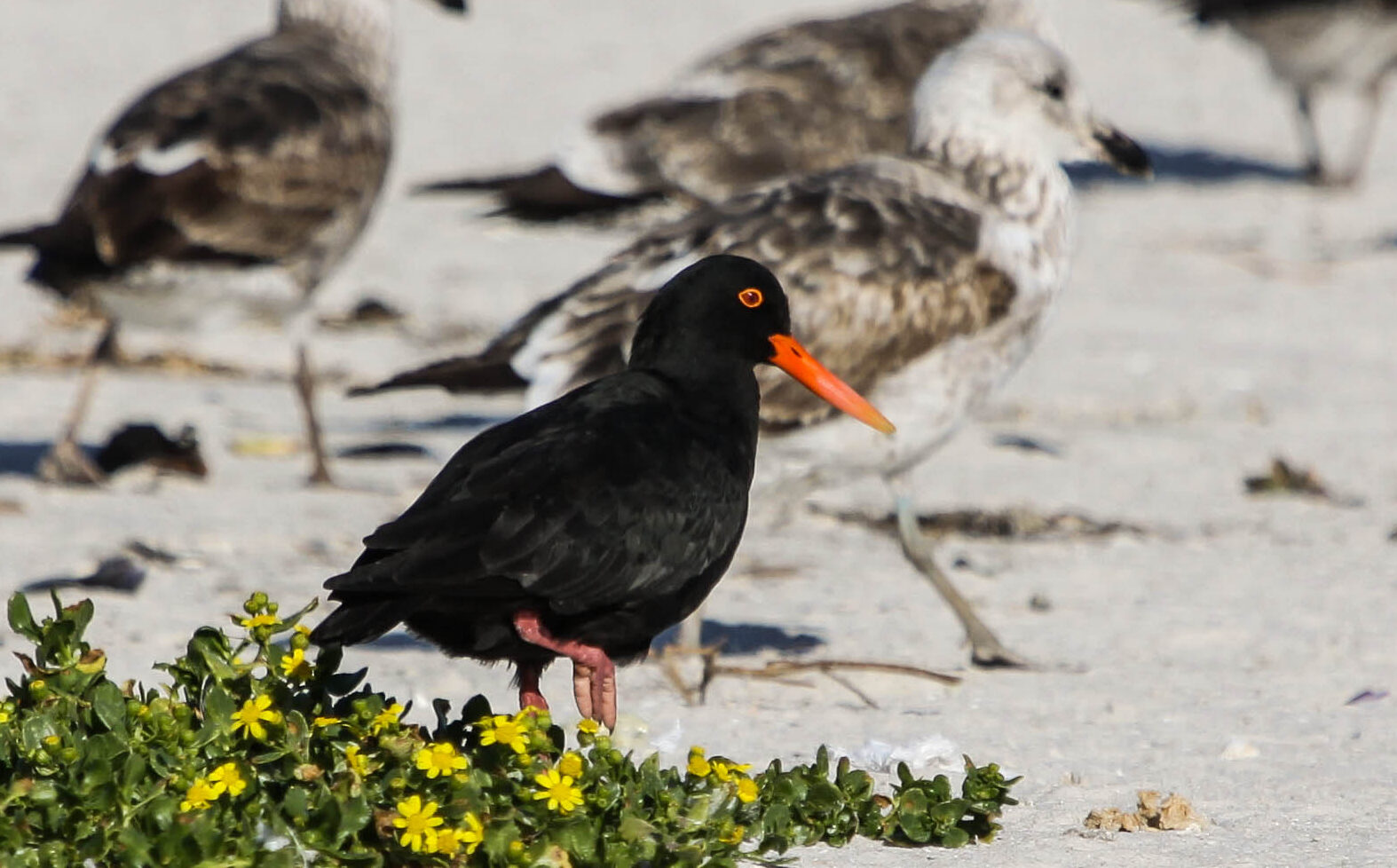
African Oystercatcher Fact File
Distribution: Southern and south-western coasts of Africa from northern Namibia to Eastern Cape Province, South Africa.
Conservation Status: Least Concern – downgraded from Near Threatened in 2015
Subspecies: None – Monotypic
Current conservation efforts
The African Oystercatcher is near-endemic to South Africa. Whilst its status has changed to ‘Least Concern on the IUCN list, the species still faces threats from disturbance on beaches where it nests. Nature Valley Trust and BirdLife South Africa are working in partnership to run #Share the Shores. This campaign is designed to raise awareness of the African Oystercatcher and educate people using nesting beaches about how they can do this without disturbing the birds.
Gallery


