Buttonquails
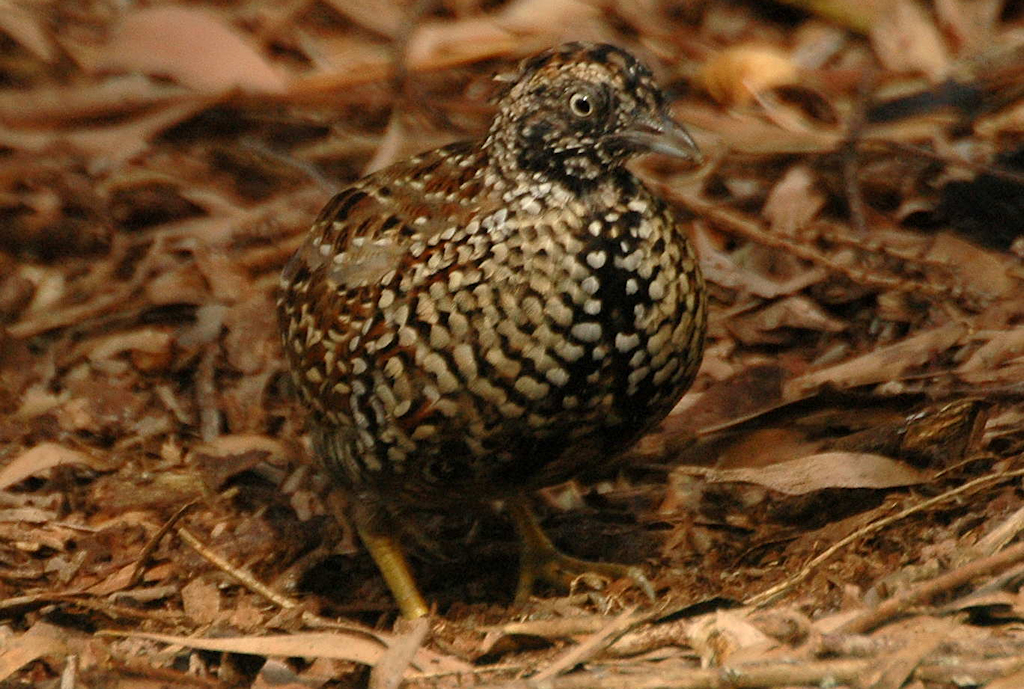
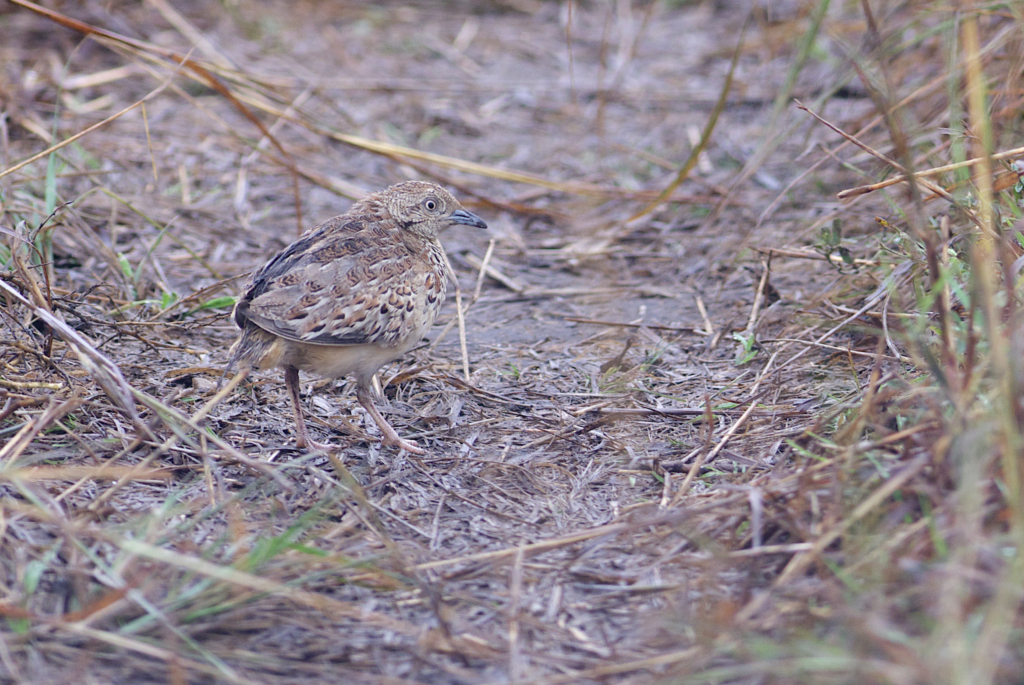
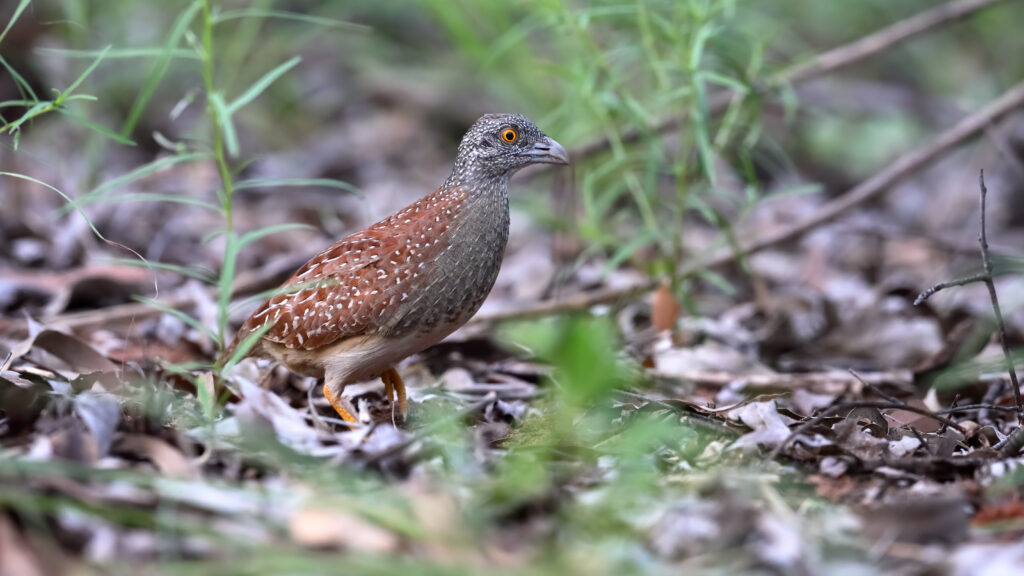
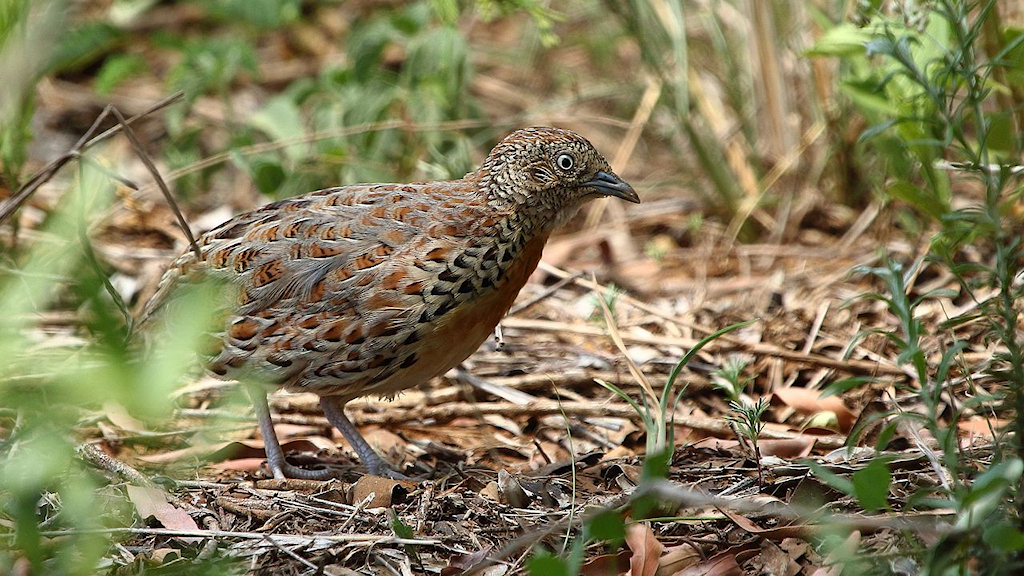
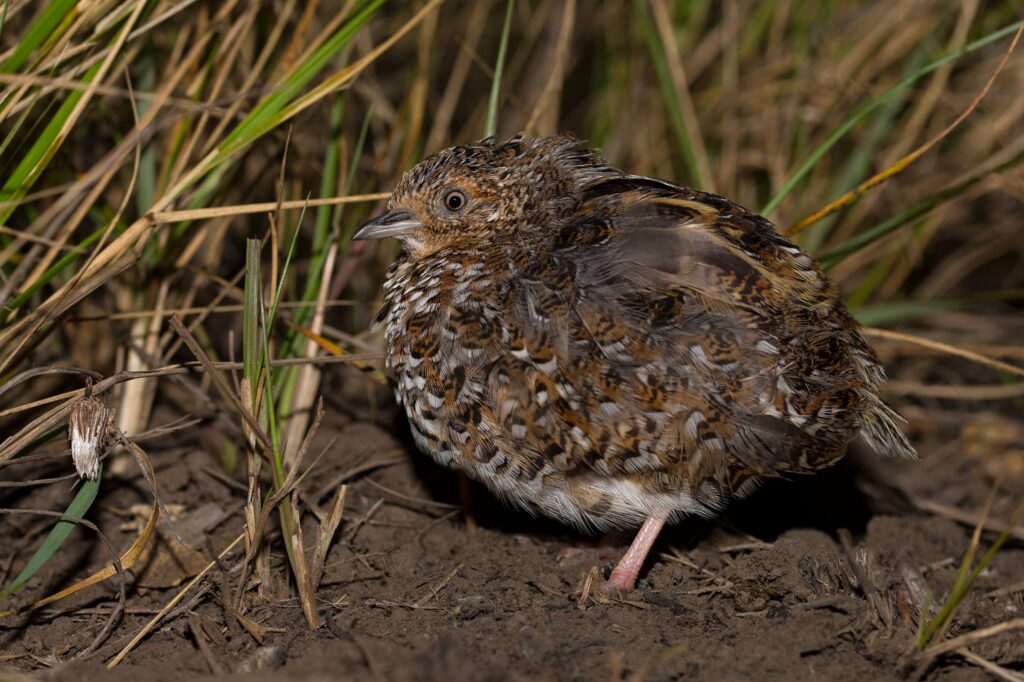
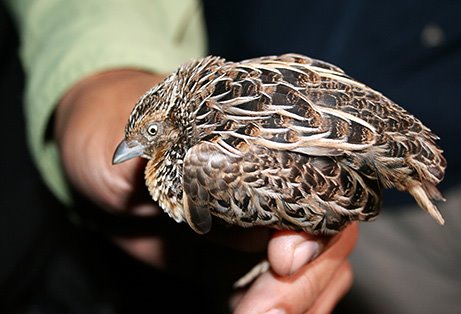
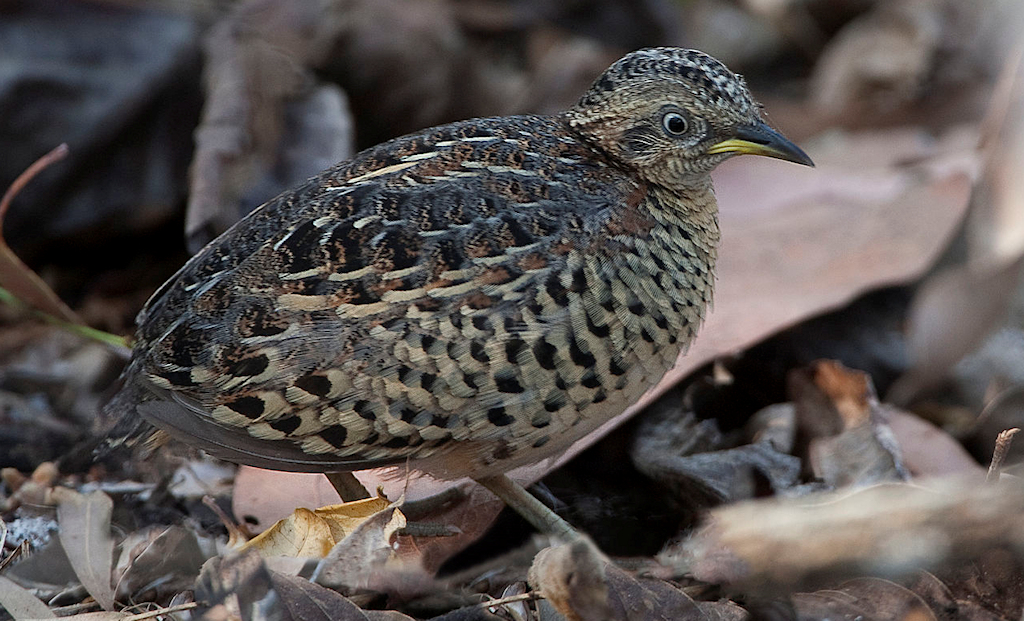
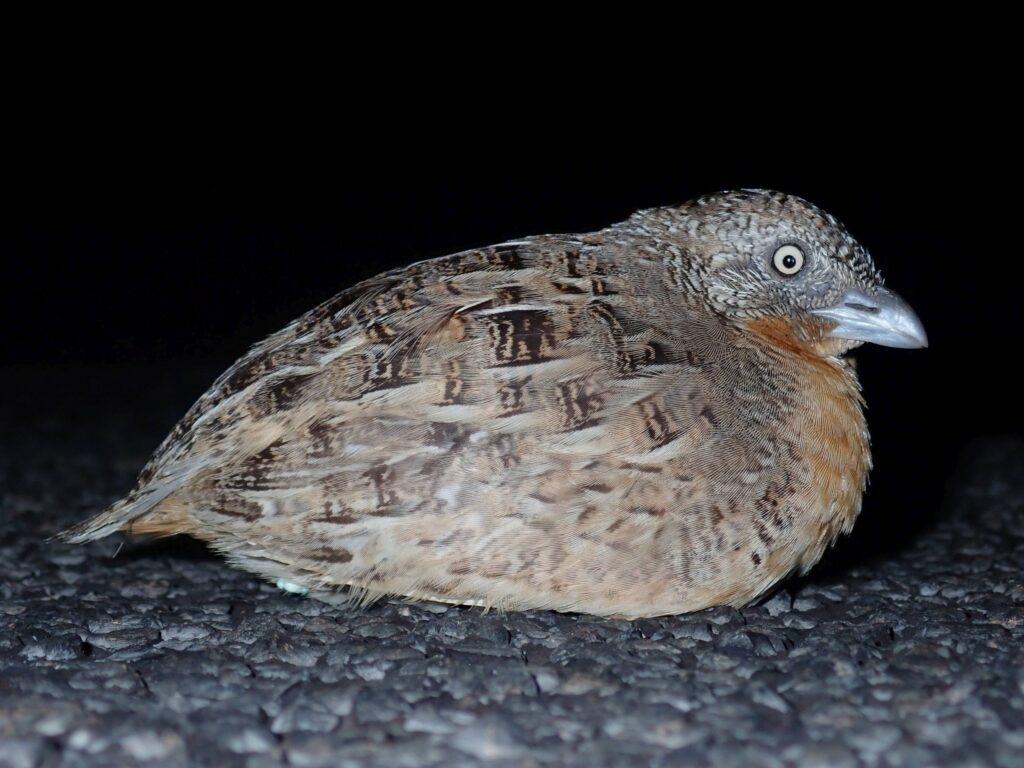
The family TURNICIDAE comprises seventeen Buttonquails in the genus Turnix; and one Quail-Plover in its own genus – Ortyxelos.
Family: TURNICIDAE (Gray 1840).
Genera:
- Turnix – Greek; Abbreviation of Coturnix meaning quail (Bonnaterre 1791).
- Ortyxelos – Greek; ortux quail; helos marsh (Vieillot 1825).
Distribution
- Europe; Common Buttonquail.
- Asia; Common, Red-backed, Yellow-legged, Spotted, Barred, Sumba, and Luzon Buttonquail.
- Africa; Common, Black-rumped, Hottentot and Madagascar Buttonquail and Quail-Plover.
- Australasia; Red-backed, Black-breasted, New Caledonia, Painted, Buff-breasted, Chestnut-backed, Red-chested and Little Buttonquail.
Current Taxonomy: Morphological analyses placed the Turnicidae in the suborder Charadrii, however recent molecular phylogenetic studies, have indicated it would be better placed in the sub order Lari where it is likely to be accompanied by the Dromadidae (Crab-plover) and Turnicidae (buttonquails). More detail here. The new thinking on the suborder is as follows;
- Family Turnicidae – Buttonquails (18 species)
- Family Dromadidae – Crab-Plover (1 species)
- Family Glareolidae – Coursers & pratincoles (17 species)
- Family Laridae – Gulls, terns, skimmers (103 species)
- Family Stercorariidae – Skuas (7 species)
- Family Alcidae – Auks (25 species)
- Common Buttonquail Turnix sylvaticus (Desfontaines 1789)
- ∗ T. s. sylvaticus (Desfontaines 1789)
- ∗ T. s. lepurana (Smith 1836)
- ∗ T. s. dussumier (Temminck 1828)
- ∗ T. s. davidi (Delacour & Jabouille 1930)
- ∗ T. s. whiteheadi (Ogilvie-Grant 1897)
- ∗ T. s. bartelsorum (Neumann 1929)
- ∗ T. s. nigrorum (duPont 1976)
- ∗ T. s. celestinoi (McGregor 1907)
- ∗ T. s. suluensis (Mearns 1905)
- Red-backed Buttonquail T. maculosus (Temminck 1815)
- ∗ T. m. beccarii (Salvadori 1875)
- ∗ T. m. kinneari (Neumann 1939)
- ∗ T. m. obiensis (Sutter 1955)
- ∗ T. m. floresianus (Sutter 1955)
- ∗ T. m. sumbanus (Sutter 1955)
- ∗ T. m. savuensis (Sutter 1955)
- ∗ T. m. maculosus (Temminck 1815)
- ∗ T. m. saturatus (Forbes, W. 1882)
- ∗ T. m. furvus (Parkes 1949)
- ∗ T. m. giluwensis (Sims 1954)
- ∗ T. m. horsbrughi (Ingram 1909)
- ∗ T. m. mayri (Sutter 1955)
- ∗ T. m. salomonis (Mayr 1938)
- ∗ T. m. melanotus (Gould 1837)
- Yellow-legged Buttonquail T. tanki (Blyth 1843)
- ∗ T. t. tanki (Blyth 1843)
- ∗ T. t. blanfordii (Blyth 1863)
- Black-rumped Buttonquail T. nanus (Sundevall 1850)
- Fynbos Buttonquail T. hottentottus (Temminck 1815)
- Spotted Buttonquail T. ocellatus (Scopoli 1786)
- ∗ T. o. benguetensis (Parkes 1968)
- ∗ T. o. ocellatus (Scopoli 1786)
- Barred Buttonquail T. suscitator (Gmelin 1789)
- ∗ T. s. taigoor (Sykes 1832)
- ∗ T. s. bengalensis (Blyth 1852)
- ∗ T. s. plumbipes (Hodgson 1837)
- ∗ T. s. leggei (Baker 1920)
- ∗ T. s. okinavensis (Phillips 1947)
- ∗ T. s. rostratus (Swinhoe 1865)
- ∗ T. s. blakistoni (Swinhoe 1871)
- ∗ T. s. pallescens (Robinson & Baker 1928)
- ∗ T. s. thai (Deignan 1946)
- ∗ T. s. atrogularis (Eyton 1839)
- ∗ T. s. suscitator (Gmelin 1789)
- ∗ T. s. fasciatus (Temminck 1815)
- ∗ T. s. haynaldi (Blasius 1888)
- ∗ T. s. nigrescens (Tweeddale 1878)
- ∗ T. s. rufilatus (Wallace 1865)
- ∗ T. s. powelli (Guillemard 1885)
- Madagascan Buttonquail T. nigricollis (Gmelin 1789)
- Black-breasted Buttonquail T. melanogaster (Gould 1837)
- Painted Buttonquail T. varius (Latham 1801)
- ∗ T. v. varius (Latham 1801)
- ∗ T. v. novaecaledoniae (Ogilvie-Grant 1889)
- ∗ T. v. scintillans (Gould 1845)
- Buff-breasted Buttonquail T. olivii (Robinson 1900)
- Chestnut-backed Buttonquail T. castanotus (Gould 1840)
- Red-chested Buttonquail T.pyrrhothorax (Gould 1841)
- Sumba Buttonquail T. everetti (Hartert 1898)
- Luzon Buttonquail T. worcesteri (McGregor 1904)
- Little Buttonquail T. velox (Gould 1841)
- Quail-Plover Ortyxelos meiffrenii (Vieillot 1819)
Past Taxonomy: Until recently the Buttonquails have been considered part of the order Gruiformes but studies showed that they are more closely related to waders and so were moved to the Charadriiformes and part of the Charadrii. They have subsequently been moved to Lari (gulls and allies).
Bibliography
- BirdLife International: IUCN Red List for birds. Downloaded from http://www.birdlife.org on 26/03/2020
- del Hoyo, Josep, Andrew Elliot & Jordi Sargatal: Handbook of the Birds of the World – Vol. 3 (1996)
- Hayman, Peter, John Marchant & Tony Prater: Shorebirds – An identification guide to the waders of the world (1986)
- Jobling, James A.: Helm Dictionary of Scientific Bird Names (2010)
- Seebohm, Henry: The Geographical Distribution of the Family Charadriidae, or, The Plovers, Sandpipers, Snipes, and Their Allies (1888)
Click on an image for more information about the individual species.